

How Biotechnology is Merging with AI to Create the Future of Bioinformatics
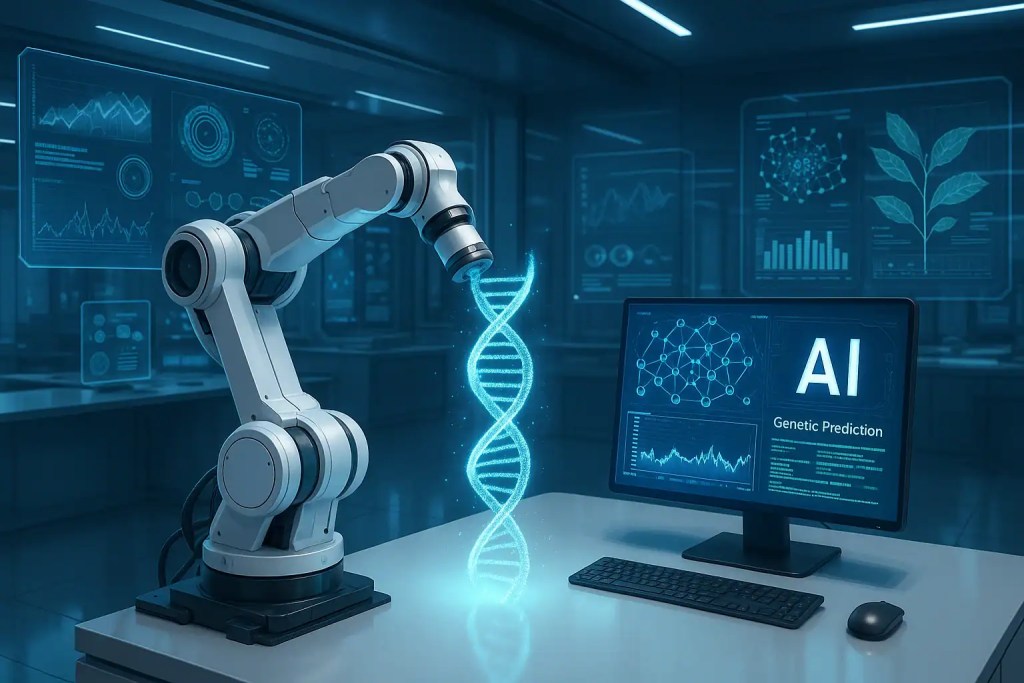
Biotechnology has achieved some remarkable advancements for us. Now we can read DNA, grow cells in a culture, and even design a new vaccine. It has changed the way we look at health, diseases, and the human body. But now, AI in biotechnology is a new player making biotech even more fascinating.
Bear in mind that “AI” does not stand for robots and self-driving vehicles. It refers to intelligent tools that learn data, identify patterns, and make decisions. Biotechnology, which produces vast amounts of highly analytical information, is a perfect match. At any given moment, somewhere in a lab far and distant, data is being generated for genes, proteins, cells, and so on. By manual sorting, the process would take years. This is where AI steps in to reduce the time required by scientists for analyzing and interpreting this data.
Two technologies are now collaborating to provide us with new opportunities: one to guarantee that drug discovery moves forward quickly and safely, and the other to customize medication based on your genes and even forecast when a disease could appear.
The integration of AI and biotechnology will be covered in this article, along with how this partnership is affecting the development of bioinformatics, a field that combines data science and biology. Science and health have an increasingly interconnected, intelligent, and fascinating future.
Evolution of Bioinformatics
The requirement to manage biological data led to the development of bioinformatics. In order to store and compare DNA sequences, researchers needed tools in the 1990s. To examine genes and proteins, they had to have modeled basic software. BLAST is undoubtedly the most well-known tool that scientists use to compare two DNA sequences. It marked the beginning of biology’s relationship with the computer.
Then followed a gigantic shift. The Human Genome Project finished mapping all of the DNA of the genes in 2003 leaving the world with tremendously huge amount of data. This was the start of something big. today’s laboratory generates more data from protein profiling, genome sequencing, and medical imaging testing. Old bioinformatics were too slow and was not able to cope with the size and complexity of contemporary biological data. Higher-level computing was put into practice at this point, followed by AI.
AI provided a new perspective. It learned from the data, not merely processed it. More quickly than ever before, algorithms could now forecast results, discover hidden patterns, and offer observations. This transformed everything.
In 2020, DeepMind made a significant advancement with AlphaFold. For many years, one of the greatest mysteries in biology was figuring out how proteins fold. Scientists may now better comprehend how proteins function and create new ones thanks to AlphaFold’s AI solution.
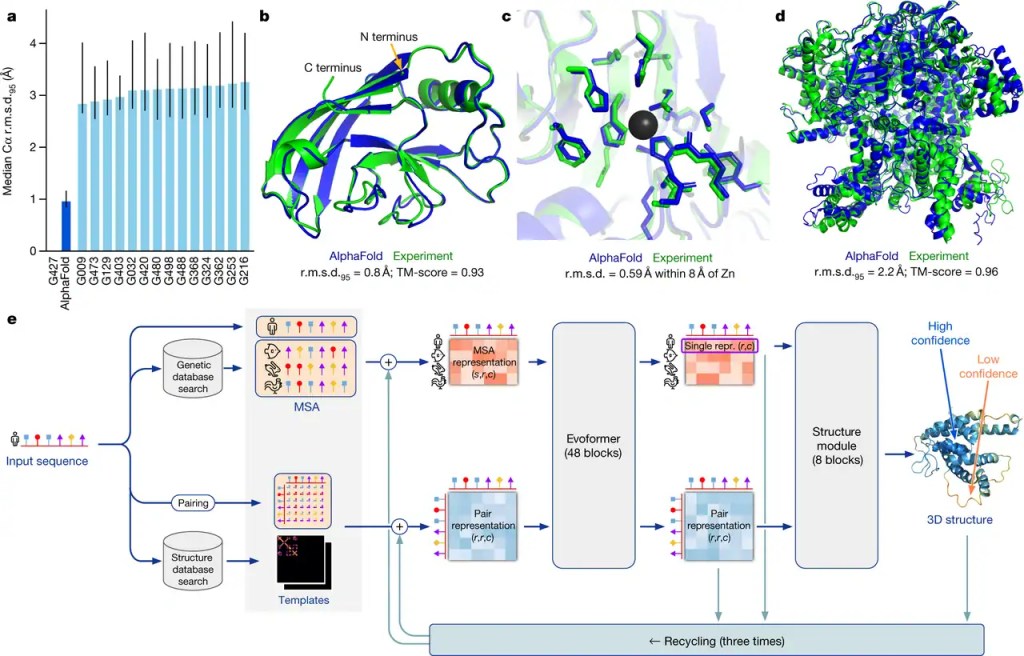
Nowadays, bioinformatics covers more than just data storage. It’s about learning new things. AI can be used to create better medications, gain a deeper understanding of sickness, and even forecast potential health hazards.
Intelligent systems have replaced basic tools in the field. Plus, this transformation is only beginning.
Role of AI in Biotechnology
Artificial Intelligence (AI) is becoming a powerful tool in biotechnology. It’s not just about machines doing tasks, it’s about machines learning and improving, just like humans. In biotech, this means faster discoveries, smarter research, and better results.
Managing Huge Amounts of Data
Biotechnology creates a massive amount of data every day. This includes genetic codes, protein structures, lab results, and clinical records. Sorting through all of it by hand would take years. AI helps make sense of it. It can scan, sort, and analyze millions of data points in minutes. This allows scientists to find patterns, make comparisons, and reach conclusions much faster.
Finding Hidden Patterns
The ability to identify patterns is one of AI’s greatest advantages. AI is able to identify signs that people could miss, even in complex and unorganized information. For instance, using historical data, it may identify a rare mutation associated with a disease or forecast the behavior of a virus.
In fields like genetics, where the data is extensive and complicated, this is highly helpful. AI assists in transforming this data into information that can save lives while improving health.
Increasing the Rate of Research and Development
Every element of biotech research is accelerated by AI. It can assist with design tests, pick the correct supplies, and even suggest better procedures. Faster progress and less time wasted are the results of this.
AI can quickly sort through thousands of molecules to identify the most viable ones in fields like medical development. This speeds up the development of new therapies and reduces the need for years of laboratory testing.
Supporting Precision and Personalization
AI also aids in improving the accuracy of biotechnology. It can adapt therapies to individuals based on their genetic makeup. Giving the correct medication to the right individual at the right time is the concept behind personalized medicine.
AI can provide personalized health programs or therapies that are most effective for a person by examining their DNA, medical history, and lifestyle.
A Smarter Way to Solve Complex Problems
Biotech problems are frequently complicated and messy. AI helps by breaking them down and solving them step by step. It improves over time and gathers knowledge as it goes. In environmental science, agriculture, and medicine, this results in more intelligent and efficient solutions.
To sum up it briefly, AI is not just assisting biotechnology but also revolutionizing it. It makes every step faster, more accurate, and more intelligent. Additionally, biotech and AI are working together to expand the limits of science.
Applications at the Intersection of AI and Biotechnology
The outcomes of combining biotechnology and artificial intelligence are not only fascinating but also transformative. These technologies are already changing the way we raise food, diagnose illnesses, and find new treatments. Let’s explore several important domains where this powerful combination is having practical effects.
Drug Discovery and Development
Customarily, if a new drug is developed, that process could take over a decade at a cost of billions. To find one that worked, researchers had to test thousands of compounds. It was a process that was uncertain and slow, and expensive.
AI is changing that. It is able to scan databases of chemicals quickly to suggest compounds most likely to work. Even just before any molecule reaches such a lab, it predicts its behavior within the body. This can help scientists to skip many of the steps. These steps are tentative experimentation phases.
AI identifies potential side effects and also suggests safer alternatives. AI can help through dosage optimization in another way. Improved success chances, lower costs, and faster development. Months can now complete what took years once.
Genomics and Personalized Medicine
Every person has a differing DNA. A treatment may not work on another, and that is why one may benefit. AI makes medicine more precise also personal through it.
When analyzing someone’s genetic data, AI can spot patterns or mutations tied to illnesses. Early screening or lifestyle changes can be recommended, and risk can be predicted for certain conditions like cancer, heart disease, or diabetes.
This is the very heart of personalized medicine: treatment truly fits the individual when it is we who tailor it. AI is there to help doctors in order to make decisions based on a patient’s unique genetic profile. General guidelines are not the only consideration that is present.
Gene Editing and CRISPR Optimization
Gene editing tools like CRISPR let scientists “cut as well as paste” DNA. However, the right spot is tricky to edit. Harmful effects are able to occur in the event that the edit is slightly off.
This process of AI helps guide. Flagged are possible errors, and predicted are optimal DNA change locations. Accuracy can be improved by way of the suggestions. Side effects are lowered by the advice.
AI makes gene editing safer and smarter now. It also makes it more reliable for it. This opens up the doors because of how it can treat such inherited diseases, it can improve the crops, and it even cure rare genetic disorders.
Medical Imaging and Diagnostics
Medical scans, such as CT, MRI, and X-rays, produce images as massive data sets. Doctors can understand them since they frequently have the experience. Doctors may benefit from AI since it provides both speed and precision.
AI systems that have been trained on thousands of photos are able to identify minute symptoms of illness that the human eye could miss. They can identify early indications of Alzheimer’s, fractures, and malignancies. Both the speed and accuracy of diagnoses have increased.
AI supports remote healthcare now. AI tools can assist frontline workers with decisions in areas with limited doctor access. These tools also enable scan interpretation in all of those areas.
Agriculture and Environmental Health
Biotechnology is not just confined to human health. AI is also helping agriculture along. Better crop varieties can be suggested via plant genetics analysis. Furthermore, it is able to monitor the soil’s health.
Biotech companies use AI for the development of pest-resistant or drought-resistant crops. Climate data can also be monitored by them so as to assist farmers in making better decisions regarding planting and harvesting. In environmental science, AI as well as biotech work together to clean water, track pollution, and even break down waste by using engineered microbes.
These examples show that the impact is just how wide-reaching. AI, along with biotechnology, is teaming up to solve real problems within hospitals, farms, as well as labs. Nature also has problems being dealt with by these technologies.
This is only just the start for now. As both fields grow, they will collaborate toward unlocking even more breakthroughs in ways we can’t fully imagine yet.
The Future of AI in Bioinformatics
The junction of biology and technology is where science is going. Bioinformatics is about to enter a new era that is quicker, smarter, and more human-centered than ever before as biotechnology pushes boundaries and AI keeps developing.
Smarter Systems That Learn and Evolve
AI systems in the future will continuously learn from data rather than merely analyzing it. With each experiment, DNA sequence, and patient record, they will get better on their own. This translates into fewer mistakes, quicker development, and more precise forecasts.
Platforms for bioinformatics will develop into intelligent helpers rather than static tools. They will direct researchers, make recommendations for further action, and even create studies. The scientist’s responsibilities will change from manual analysis to decision-making and creative guidance.
Merging AI with the Brain and Bio-Interfaces
Integration of the brain and computer is among the most futuristic possibilities. One day, artificial intelligence (AI) might be able to interpret neural signals and convert ideas into actions, assisting individuals with disabilities in communicating, controlling gadgets, and even regaining lost senses.
The merging of biotechnology, neuroscience, and artificial intelligence may result in memory-enhancing implants, intelligent prosthetics, and more natural interactions between humans and machines.
AI-Powered Lab Automation
AI will not just examine data in labs of the future; it will conduct the entire experiment. AI-powered robotic labs are currently capable of accurately completing thousands of tests per day. These labs may soon be able to function virtually totally without human input.
Just give the AI lab a task, such as “discover a protein that stops a virus,” and it will conduct experiments, analyze the results, and continue to get better. This will speed up advancements in synthetic biology, agriculture, and medicine.
Hyper-Personalized Healthcare
Today, AI uses your genes to help doctors understand your health. It might go much deeper in the future. Imagine a system that uses wearables, smart gadgets, or even internal sensors to track your health in real time in addition to knowing your medical history.
AI might then develop a personalized, dynamic health plan based on this information. You might receive early disease warnings, dietary recommendations, real-time medication adjustments, and even recommendations on when to rest or exercise. In addition to treating disease, healthcare will stop it in the first place.
Summary: The Future of AI in Biotechnology
The future of science and healthcare is being shaped by the combination of biotechnology and artificial intelligence. Once restricted to collecting genetic data, bioinformatics is now able to analyze, forecast, and speed up discoveries thanks to artificial intelligence. AI is enhancing biotech’s speed, accuracy, and decision-making in everything from drug development to personalized treatment. This collaboration is breaking new ground and finding solutions to pressing issues in synthetic biology, diagnostics, and agriculture. AI-driven labs, smart health systems, and predictive global health models are some of the trends that portend a time when technology will not only assist biology but also change with it.
For more entertaining, innovative tales from the cutting edge of science and technology, follow Numpty Neuron. Curious brains never stop investigating. Stay Curious! Stay Numpty!


No comments yet. Be the first to share your thoughts!