

How Self-Reflection Can Accelerate Emotional Intelligence Development
Have you ever been in an argument with someone and noticed how quickly you can pinpoint their mistakes and blame them for causing this misunderstanding between both of you? This article explores how self-reflection and emotional intelligence work together to help you understand your feelings, respond more calmly, and build healthier relationships. Our minds are naturally wired to spot other people’s mistakes more easily than our own. On an honest note, it’s much harder to turn that same lens inward and recognize our own mistakes. And learning to realize our own mistakes is called self-reflection. Self-reflection involves pausing to notice our own emotions. It’s about being honest with ourselves without sugarcoating real emotions. We achieve this by paying attention to what we are thinking and how we are reacting to those inner experiences in a healthier way. Over time, this helps us make better decisions, communicate more clearly, and grow emotionally. But how can it correlate to emotional intelligence? Self-reflection helps us recognize what we are feeling and how our emotions influence our actions. This awareness is the foundation of Emotional Intelligence.
Understanding Emotional Intelligence
Emotional Intelligence, often called EI, is the ability to master and manage your own emotions and reactions to daily life situations. It’s controlling them and handling them well for the benefit of yourself and others. Although the term is commonly used in modern psychology, emotional intelligence is an ability that, when developed, can enhance your daily communication and strengthen your relationships.
Importance of Self-reflection
It is very easy to get absorbed in routines. Completing one task after another without pausing or taking a break. This can be tiring because our minds are so used to the routine that we end up neglecting our own emotions, thoughts, etc. This is where self-reflection matters. Self-reflection also plays a key role in motivation. Taking a moment to look back on what we’ve done helps us see how far we’ve come. It reminds us of what we’re capable of and why we started in the first place. This kind of self-reflection can spark motivation to keep pushing ahead.
How to Self-reflect
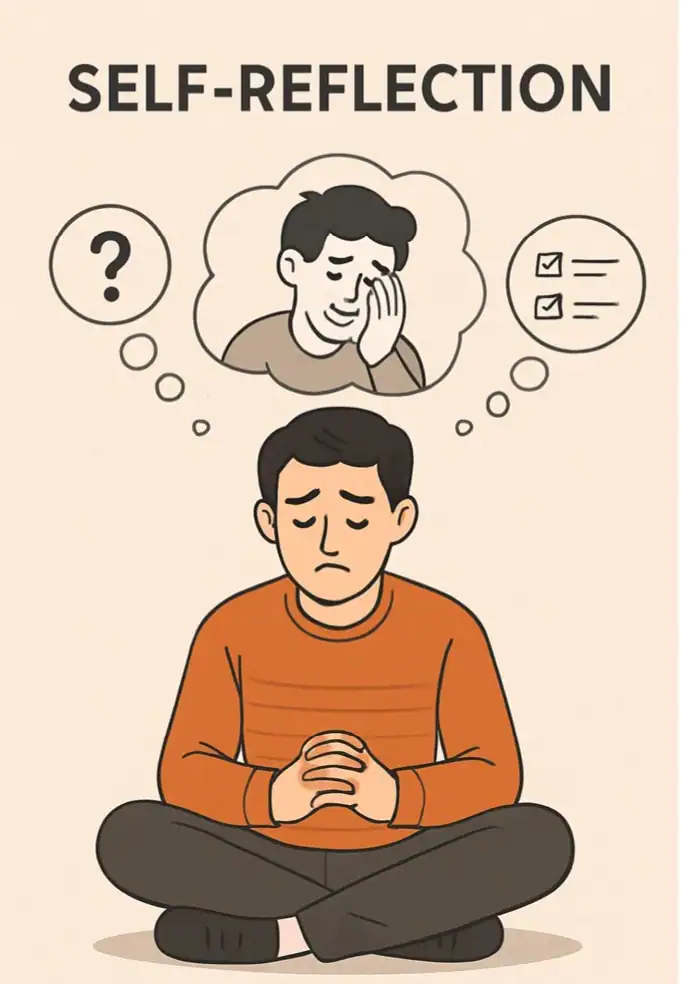
Self-reflection is a learning practice that helps us to understand ourselves on a deeper level. It’s about how you can revisit at the most embarrassing or difficult moment of your life without any regret and with full acceptance. It’s not just about thinking, it is about learning from your experiences, accepting your flaws, and growing through honest self-awareness.
To begin, set aside quiet time for yourself. Remove distractions and allow space for honest thought. Ask yourself:
- What exactly happened? (Describe the situation objectively.)
- What led to my actions or reactions? (Think about your emotional state, mindset, and circumstances at the time.)
- Why did I respond the way I did? (Reflect on your beliefs, fears, habits, or triggers.)
- What can I learn from this? (Focus on insights, not blame.)
- What would I do differently next time? (Envision how you can respond with more awareness, control, or compassion moving forward.)
These are valid questions to ask yourself and learn to come to terms with it without any form of judgments. Self-reflection isn’t about self-criticism, it’s about self-connection. Ask yourself how you can change your reaction to it from now on, how you can confront it, and what things can be controlled and what cannot.
It All Starts With You
Being emotionally intelligent means having the skill to handle tough situations. You need to dig deep into your feelings and stay calm under pressure. Research shows that individuals possessing higher emotional intelligence are better at handling stress, as well as making impactful decisions.
Signs of Emotional Intelligence
1. Self-awareness
This is the first step in building emotional intelligence. Being aware of yourself; means knowing your emotions, understanding what causes them, and observing how they affect your thoughts and behaviors. For instance, knowing that you are anxious before speaking in public prepares you mentally rather than leaving you spiraling.
2. Self-regulation
It’s easy to know your feelings, but it’s difficult to manage them effectively. Self-regulation is your capacity to stop and respond on purpose instead of acting on impulse. This is what keeps you cool during intense arguments or makes sense under pressure.
3. Self-motivation
Emotionally intelligent individuals are motivated not only by outside incentives, but also by a personal willingness to learn and succeed. Motivation pushes you forward even when it gets difficult or dull. It’s what makes you stick around despite obstacles and continue to work towards your objectives. It is important to reflect on our past achievements as well. For instance, let us say a few years back, you started a difficult career path without knowing where it would take you. Now, if you look back at how it all began, you would be amazed at how far you have come. You have gone through many setbacks in life, achieved the impossible, and are leading a much better life than before.
This showcases how reflecting on our past successes helps us appreciate ourselves and how much we have grown as adults. It not only improves our self-esteem but also motivates us to push forward, set new goals, and believe in our potential to grow.
The impacts of positive and negative self-reflection on our self.
| Positive Self-reflection | Negative Self-reflection |
| Thinking about past achievements | Thinking about past failures |
| Taking time to reflect on our past successes can boost our performance levels and emotional well-being. It reminds us of our past achievements and encourages us to keep striving for more. | Focusing on our negative experiences become discouraging and overwhelming. When we replay our regrets and mistakes in our minds, we feel sad and weighed down by self-doubt. This kind of reflection makes it harder to move forward and traps us in a negative bubble instead of helping us learn and grow. |
| A study published in the Journal of Happiness Studies by Bryant et al. in 2005 found that reflecting on positive memories can increase happiness and optimism. Thus helping individuals feel more capable and driven in the present. | Negative self-reflection can lead to self-doubt, lower our confidence, and temporarily drain our motivation to keep going. But, if you focus on the learning from the failure that can help you boost your confidence by mentally preparing yourself if such challenges come again in the future. |
 |  |
4. Empathy
Empathy is the power of understanding and connecting with how another person feels. It’s what makes you relate to someone on a deeper level. It is more of seeing things the way another person sees them. This fosters trust and builds stronger relationships.
You must remember none of us are born with these skills. We have to work on them day by day to increase our emotional intelligence.
Benefits of Self Reflection and Emotional Intelligence
As you go through new experiences, you learn more about yourself. Let’s say you have gotten into a fight with your best friend. Your first reaction will be to pin the blame entirely on them. Self-reflection can help you look inward and realize the attitude of yourself that contributed to the split. This way you can improve yourself as well as your relationship with others. Cultivating self-reflection can be incredibly helpful in developing high emotional intelligence (EI). Here are a few ways self-reflection helps improve your EI:
1. You Understand Yourself Better
You become more sensitive to what makes you happy, sad, anxious, or frustrated. This sensitivity allows you to recognize your emotional triggers, which are the things that trigger strong emotional responses. When you practice self reflection and emotional intelligence, you start noticing patterns in your reactions.
2. You Learn From Your Past
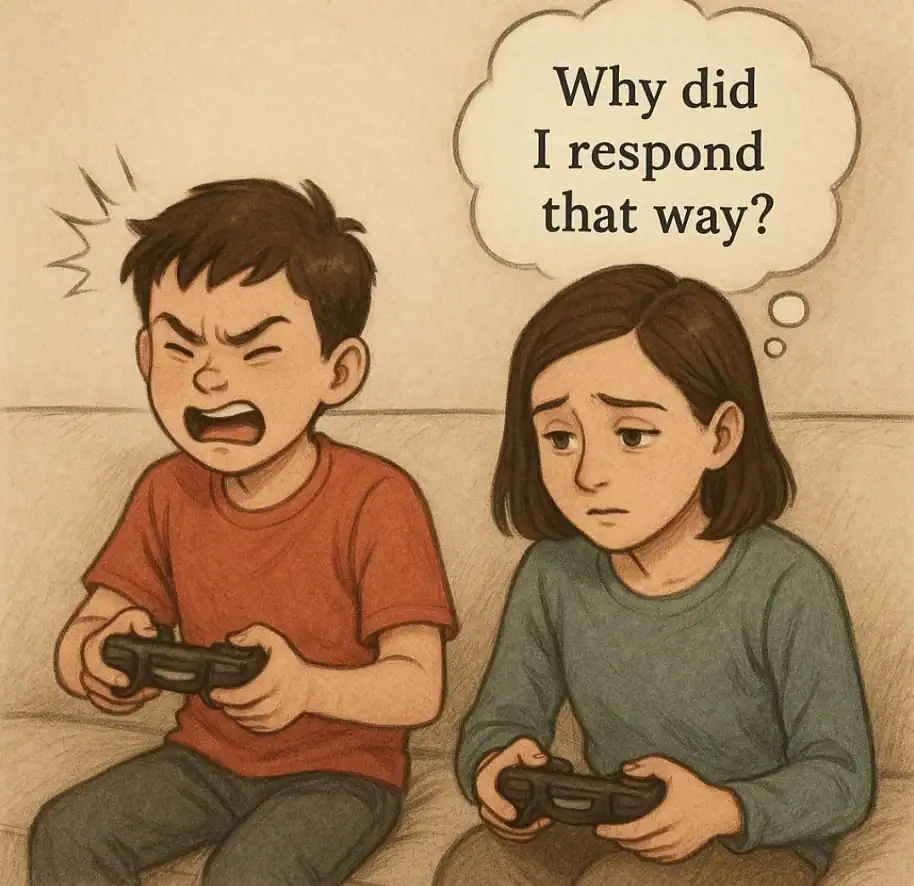
Another strong advantage of self-reflection is that it makes you learn from your errors. Suppose you are playing your favorite game with your sibling. But things didn’t go your way. You lost, and anger sets in. At that moment, you blast out and give a hurtful remark. Later, once you’ve had a chance to cool down, you wonder, “Why did I respond that way? ” You understand that you weren’t angry with your sibling, you were simply annoyed at losing. That moment of awareness is self-reflection.
3. You Empathize More Effectively
When you take time to think about how you felt in certain situations, it will help you imagine how others would feel if they were in your shoes as well. Let’s say you are having a conversation with 2 of your friends, one of your friends will purposely ignore you in conversation, making you feel left out. Of course, you would be hurt by their treatment to you. This will make you stand up for yourself and help you to imagine the same pain others would have felt if they went through the same as well by your ignorance in any other moment.
4. You React More Calmly
Sometimes, we react without thinking, like slamming a door or saying something mean. This happens when we’re unable to control our emotions, and hence it causes us to have an outburst in the situation. But what could help us regulate it or react calmly? Self-reflection does. This will make you think, “I have been in this situation before, and I am aware of the consequences, let me take a deep breath instead of lashing out”. Once you start doing this, you will get a better hold of yourself and can control your emotions much better than before. Over time, self reflection and emotional intelligence help you respond instead of react.
Summary
Self-reflection is a much-needed tool for looking inward to monitor your thoughts and actions. Slowing down a little, questioning correctly, and being truthful is the right way to achieve it. How did that situation make me feel? Why did I react that way? Specifically, what could I take from it? These little self-assessments might result in huge changes in how you value your emotions, view others, and negotiate daily obstacles. The more one reflects, the more one is in touch with one’s thoughts and feelings. This increases emotional intelligence, growth, and development, thus making them more compassionate and more level-headed. Understanding the world around you improves as you gain knowledge of yourself. Real emotional intelligence starts there. Emotional intelligence is a skill, it is not a trait that only a handful of fortunate individuals are born with. It is an ability you can develop by merely taking the time needed to know yourself better.
If this article resonated with you, imagine what can happen when you apply self reflection and emotional intelligence with expert support. At Numpty Neuron, we offer life and career coaching programs designed to help you break patterns, build emotional skills, and create a life that actually feels like yours. Book a session or explore our coaching packages to start turning your reflections into clear decisions and confident action.


No comments yet. Be the first to share your thoughts!