
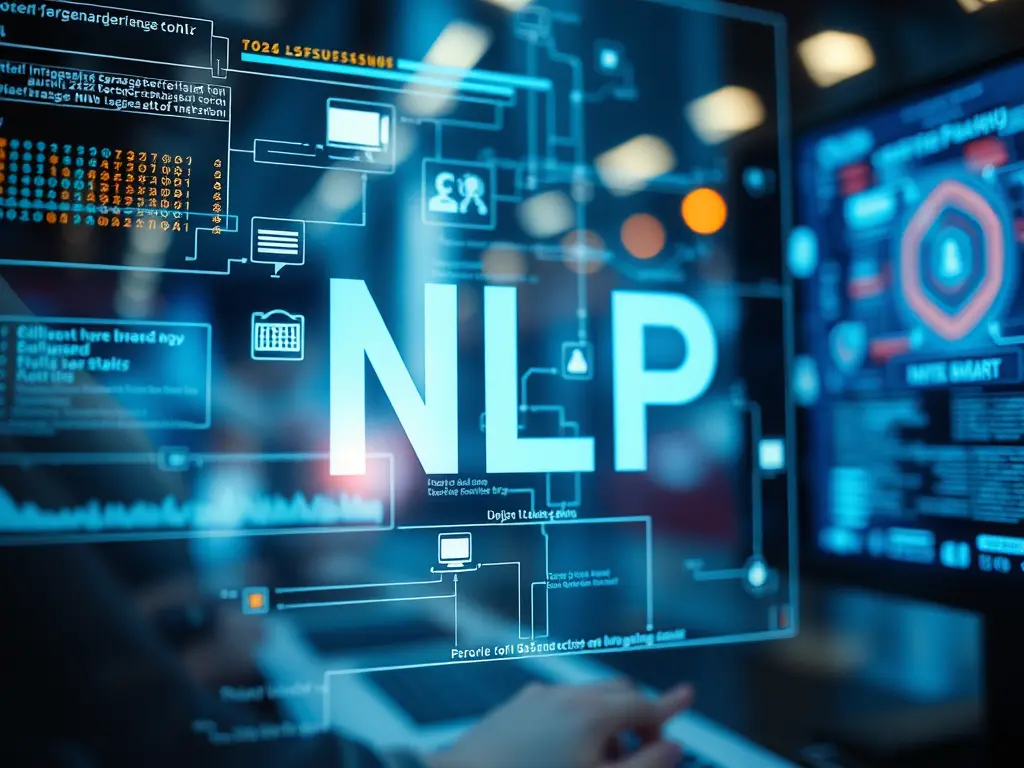
Part 1 – The Language of Machines: Understanding NLP in the Modern World (An In-Depth NLP Series)
This article is part of our in-depth series on Natural Language Processing (NLP). You can explore all published parts of the series in the overview below:
Series Overview
Use the links above to jump between parts of the series. All links open in a new tab.
Part 1: Exploring The Building Blocks of NLP
Welcome to the first part of our blog series on Natural Language Processing (NLP)! If you’re someone who’s curious about how computers can understand and work with human language, you’re in the right place. In this series, we’ll guide you step by step, starting from the very basics and gradually diving into more advanced topics in NLP.
In this first part, we’ll begin by breaking down the key concepts and ideas behind NLP. Think of this as the foundation you’ll need to build on as we move forward. We’ll explore what NLP is, why it’s important, and introduce some of the main elements involved in processing language.
By the end of this post, you’ll have a solid grasp of the basic building blocks of NLP, setting you up perfectly for the more complex topics we’ll cover later on. So let’s dive in and explore the fascinating world where technology meets language!
Basic NLP
You have probably heard of powerful language models like ChatGPT and Gemini, which are making waves in NLP. While these models handle complex language tasks with ease, understanding how they work starts with knowing the basics of NLP. That’s why we’re starting this blog series with foundational concepts to help you appreciate how these advanced tools function.
Components of NLP
To create machines that can communicate like humans—understanding and generating language easily—we use Natural Language Processing (NLP). NLP has two main parts: Natural Language Understanding (NLU) and Natural Language Generation (NLG). NLU helps machines understand what is being said, while NLG lets them respond naturally. Together, these components help machines interact with us more like people do.
- Natural Language Understanding
NLU, or Natural Language Understanding, is the part of NLP dedicated to helping machines understand and make sense of human language. It involves analyzing text to uncover its meaning and grasp the intent behind the words. NLU tackles the challenge of interpreting both structured and unstructured data, and it includes several key sub-tasks:- Text Segmentation: Dividing text into meaningful units like words, sentences, or paragraphs.
- Tokenization: Breaking down text into individual tokens or words, which are the basic units of meaning.
- Part-of-Speech Tagging: Identifying the grammatical role of each word in a sentence, such as noun, verb, adjective, etc.
- Named Entity Recognition (NER): Detecting and classifying entities in text, such as names of people, organizations, locations, dates, etc.
- Syntactic Parsing: Analyzing the grammatical structure of sentences to understand the relationships between words.
- Semantic Analysis: Understanding the meaning of the text at a higher level, including word sense disambiguation, resolving ambiguities, and understanding context.
- Sentiment Analysis: Determining the sentiment or emotional tone of the text, such as positive, negative, or neutral.
- Co-reference Resolution: Identifying when different words refer to the same entity in a text (e.g., “John” and “he” in the same sentence).
- Discourse Analysis: Understanding how different sentences relate to each other within a text.
The goal of NLU is to enable machines to understand the meaning behind the words, phrases, and sentences so that they can respond or take actions accordingly.
- Natural Language Generation
Natural Language Generation (NLG) is the part of NLP that centers on creating human-like text from structured data or other forms of information. It essentially works in the opposite way of NLU, taking raw data and turning it into text that people can easily read and comprehend. This process helps machines communicate in a way that feels natural and meaningful to human users. NLG involves several sub-tasks:- Content Determination: Deciding what information needs to be included in the generated text based on the input data or context.
- Text Planning: Organizing the content into a coherent structure, ensuring that the information is presented logically and clearly.
- Sentence Planning: Determining how to express the content in individual sentences, including choosing the right words and constructing grammatically correct sentences.
- Lexicalization: Selecting appropriate words and phrases to convey the intended meaning.
- Aggregation: Combining related pieces of information to form more concise and natural-sounding sentences.
- Surface Realization: Converting the planned text into actual sentences with correct grammar, punctuation, and style.
- Refinement: Improving the fluency and readability of the generated text, sometimes incorporating stylistic elements or tone adjustments.
The goal of NLG is to enable machines to produce text that is not only grammatically correct but also contextually appropriate and meaningful to humans. This could range from generating simple responses in a chatbot to creating complex reports, summaries, or creative content.
Key Elements
In the world of NLP, several key elements play a crucial role in transforming raw text into meaningful insights. Let’s dive into three essential elements: corpus and tokens.
- Corpus
A corpus (plural: corpora) is a large collection of written or spoken texts used to study and analyze language. It’s like a huge library of language data that researchers and developers use to train NLP models. The texts in a corpus can include books, articles, social media posts, and transcripts.
There are different types of corpora, including:- Monolingual Corpora: Texts in a single language, used to train models for that particular language.
- Multilingual Corpora: Texts in multiple languages, useful for tasks like translation and cross-lingual understanding.
- Specialized Corpora: Texts focused on a specific field or subject, such as medical or legal documents, which help tailor models to particular domains.
– By analyzing a corpus, NLP systems learn patterns, vocabulary, and structures that help them understand and generate human language.
- Tokens
Tokens are the building blocks of text in NLP. When you break down a piece of text into its smallest meaningful units, you get tokens. These units can be sentences, words, phrases, or even characters, depending on the level of granularity needed.- For example, the sentence “Numpty Neuron blends AI with psychological research.” can be tokenized into:
Words: [“Numpty”, “Neuron”, “blends”, “AI”, “with”, “psychological”, “research”, “.”] - Subwords or characters, depending on the tokenization method used.
– Tokenization is a crucial step in NLP because it simplifies the text into manageable pieces that can be processed by algorithms. This allows machines to handle and analyze language in a structured way.
- For example, the sentence “Numpty Neuron blends AI with psychological research.” can be tokenized into:
Summary
In this first part of our NLP series, we explored the basics of Natural Language Processing and broke it down into two key components: Natural Language Understanding (NLU) and Natural Language Generation (NLG). We also touched on important elements like the “corpus,” which is the collection of texts used for analysis, and “tokens,” which are the smaller chunks of language (like words or phrases) that computers work with. This foundational knowledge sets the stage for diving deeper into more complex NLP topics in future posts.
Next Parts of Our NLP Journey
💬 Join the Conversation
📖 NLP Blog Series
The NLP Blog Series is a structured, multi-part journey into the fascinating world of Natural Language Processing (NLP) — the field of AI that enables computers to understand, interpret, and generate human language. From the basics of text processing and machine learning techniques to advanced applications like chatbots, sentiment analysis, and large language models, this series breaks down complex concepts into easy-to-follow, practical guides. Whether you are a beginner curious about how machines understand text, a student diving into AI, or a professional exploring NLP applications, this series is designed to give you a step-by-step foundation along with real-world insights.
Part 2 of 9



No comments yet. Be the first to share your thoughts!