
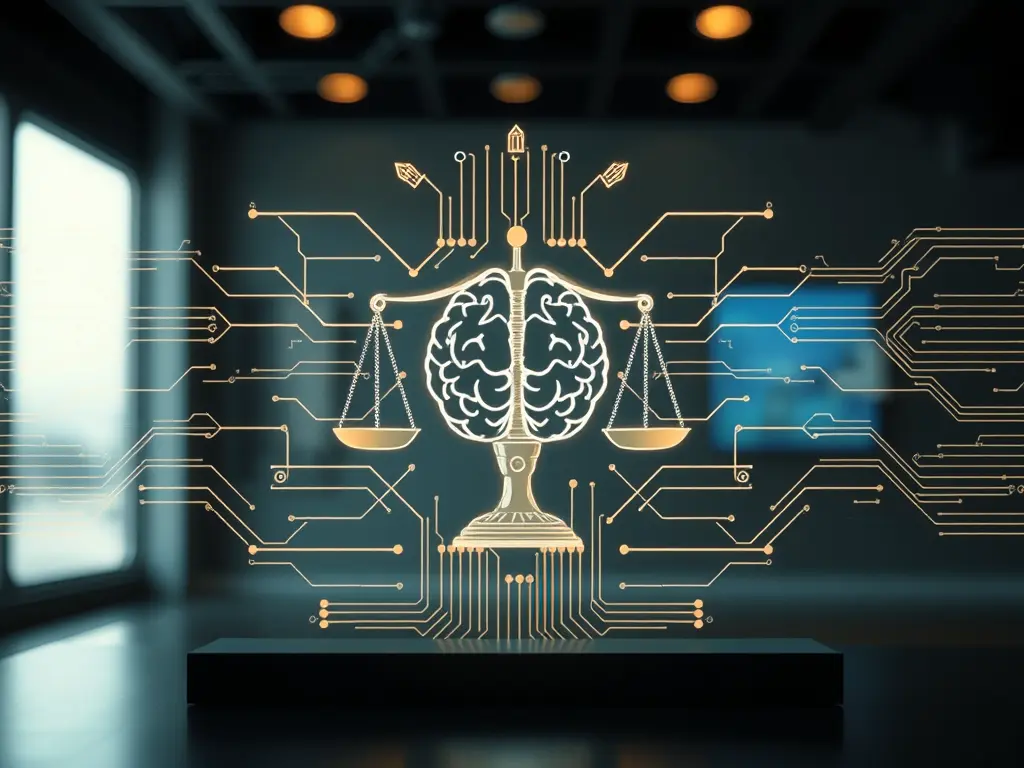
The Ethics of AI Creativity: Risks, Rewards, and Responsibilities
What Is Generative AI (GenAI)?
Generative AI (GenAI) is transforming how we create text, images, music, and video, but it also raises serious questions about responsibility and trust. In this post, we’ll explore the ethical implications of generative AI, including bias, deepfakes, copyright, and privacy, and what you can do to navigate these risks safely. Imagine asking an AI to:
- Plan your trip to your dream destination
- Give you step-by-step instructions to cook your favorite dish
- Recommend a workout routine tailored to your goals
- Assist with budgeting for an upcoming event
- Build a personalized study schedule just for you
- Generate an image based on your description
- Help you learn a new language by providing translations
With these creative possibilities, GenAI is rapidly becoming a tool people can turn to for a wide range of personalized assistance. And that’s just the beginning, AI can lend a hand with almost any challenge, acting almost like a trusted friend by your side. Yet, as AI becomes more powerful and pervasive, it raises serious ethical questions. If we don’t address these concerns, the very tool meant to assist us could end up causing real harm.
What Are the Ethical Implications of Generative AI?
Like most powerful tools, AI has two sides. It has a positive side that offers great benefits and a negative side that brings potential risks. When we explore the ethical implications of AI, we’re asking whether it respects people’s rights and promotes fairness. We’re also asking whether it avoids causing harm. Ethics guide us in determining if AI aligns with what society considers right or wrong. They also help us decide whether its impacts are helpful or harmful to others. Understanding these implications helps us develop and use AI responsibly, ensuring it contributes positively to society. Below are some of the key ethical considerations that are on everyone’s mind.
Ethical Considerations
Biases
” Bias in AI erodes Trust “
Bias in Generative AI (GenAI) can have serious consequences, leading to outputs that may be unfair, inaccurate, or even offensive. This issue arises because people collect large datasets from various sources and use them to train GenAI models. These datasets aren’t always free from bias or inaccuracies. If people don’t address these biases, they can amplify them, potentially misinforming or harming end users.
How Does Bias Affect Generative AI Outputs?
Imagine you ask, “Describe the typical roles of women in society”. The AI responds, “Women are primarily homemakers and caregivers, focusing on family and domestic duties.”
Why This Answer?
This answer might reflect traditional gender roles because the data the model learned from overly represented them, ignoring the wide range of roles that women play across all fields.
Or consider a question like, “What medications should I take for anxiety?” The AI suggests, “You should try over-the-counter remedies without consulting a doctor.”
Why this answer?
Data that emphasized self-treatment or anecdotal advice over medically vetted information may have influenced the model, potentially misleading users and harming their health.
How to Address AI Bias?
- Reducing bias starts with diverse training data that fairly represents all groups and perspectives.
- Regular audits of the AI’s outputs are also essential for detecting and correcting unintended biases, ensuring the model stays aligned with ethical standards.
Deepfakes
” Deepfakes challenges what we can trust. “
A “deepfake” is a highly realistic, yet fake, version of an original person or object, often created as an image, video, or audio clip. Advanced deep learning techniques generate these convincing imitations. Deep learning, a branch of machine learning, involves training neural networks (similar to the neurons in our brains) with multiple layers that learn patterns and process information to produce believable outputs.
How Deep Learning Mimics Learning in Humans
Think of it this way: when you meet someone new, you don’t know anything about them at first. You might ask questions like, “What’s your name?” “What do you do?” and “Where do you live?” to gather information. Your brain stores these details so that the next time you see this person, you recognize them and greet them by name.
Similarly, advanced algorithms train neural networks by feeding them specific data for a particular purpose. People can use this training for positive applications or, unfortunately, to create misleading deepfakes.
Why Are Deepfakes Usually About Famous People?
You may have heard news of the deepfakes generated of these famous personalities. You may wonder why people usually create deepfakes of these famous personalities. Why not of a common man? Let’s uncover this!
You may have noticed that deepfakes often target celebrities or well-known figures rather than everyday people. This happens because people post publicly accessible photos, videos, and audio clips of these individuals on the internet. This is especially common on social media platforms like Instagram, Facebook, and YouTube. The more visible and active someone is online, the easier it is to gather data on them, making public figures prime targets for deepfakes.
How Data Is Collected for Deepfakes
With nearly everyone owning a smartphone and using the internet, people constantly share enormous amounts of personal data online. Public figures who post frequently are particularly vulnerable to deepfakes because tools like web scraping can scan websites to gather photos, videos, and audio clips related to them.
Safety Measures to Protect Against Deepfakes:
- Limit personal information on social media: The less personal content you share publicly, the harder it is for someone to create a deepfake.
- Manage your followers carefully: Accept follow requests only from people you know and trust to reduce the risk that they misuse your content.
Being cautious with your digital presence is the best line of defense against unwanted deepfakes.
Copyright
” When AI generates, who takes its rights? “
When people train AI models on data from the internet, the models might generate content that resembles existing works created by others. While it may not be an exact copy, AI-generated content can often be strikingly similar, raising concerns about copyright infringement.
How Does This Impact Creators?
- If an AI produces content that closely mimics copyrighted material, the end user might unknowingly violate the rights of the original creators. This could not only harm the original creator’s reputation but also blur the line between authentic and AI-generated works.
- As AI-generated content grows in popularity, creators may feel pressured to use AI tools just to keep up, potentially risking their own creative individuality. Over time, this could dilute the distinctiveness that makes each artist’s work unique.
Preventive Actions to Address Copyright Concerns:
- Use public or licensed data: Training AI models on data that is in the public domain or properly licensed can help avoid copyright violations and respect the rights of original creators.
- Encourage collaboration: AI developers, content creators, and rights holders should work together to establish guidelines and frameworks that address copyright issues and allow for fair use and mutual benefit.
- Transparency on data sources: Companies should clearly disclose the types of data used to train AI models, giving users more insight into potential copyright implications.
Taking these steps can help ensure that AI content generation respects copyright laws and supports the creative rights of all parties involved.
Privacy
” Privacy should not be AI’s trade-off.”
Privacy is a priority for everyone, yet when people train AI models on vast datasets, they risk unintentionally including personal data. This raises serious concerns around unauthorized data use and potential privacy breaches. If someone mishandles or misuses a person’s data, it can lead to legal issues and a loss of user trust.
How Does Privacy Risk Impact Users?
- Lack of Transparency: Many users may not know how much data is collected from them or how it’s being used. This opacity can create feelings of unease, as users may worry about the misuse or mishandling of their information.
- Risk of Confidential Information Leaks: If users input sensitive details, there’s a chance that AI-generated responses could unintentionally reveal private information, compromising both the user’s privacy and potentially that of others.
- Loss of Control Over Personal Data: Users may have limited control over their data once they submit it to an AI system. This can lead to concerns about how long the AI system keeps its data and whether unauthorized individuals might access it.
Safety Measures to Protect User Privacy:
- Limit Personal Information in Prompts: Avoiding personal details in prompts minimizes the risk of sensitive data being stored or leaked.
- Transparency from Companies: AI providers should clearly inform users about data storage practices and the ways in which data may be used. Users should take time to read these disclosures carefully to understand the implications before using the AI model.
By promoting data transparency and caution with personal details, both companies and users can work together to protect privacy in AI interactions.
Summary
” Great power comes with Great responsibility ! ”
These are some of the major ethical considerations surrounding AI. By applying the mitigation strategies discussed, we can greatly reduce the risks associated with AI use. It’s also up to each of us to approach AI responsibly, ensuring that its benefits are maximized while minimizing potential harm. With careful management and ethical practices, AI can be a powerful tool for positive impact.
FAQs:
Generative AI itself is a tool, but how we design, train, and use it determines whether it’s ethical. The ethical implications of generative AI include the risk of bias, deepfakes, copyright infringement, and privacy violations. Clear guidelines, transparency, and human oversight are essential for using it responsibly.
Some of the biggest ethical risks of generative AI are biased outputs, realistic deepfakes that spread misinformation, copyright violations when training on unlicensed data, and privacy issues when personal information is exposed or misused.
Users can reduce ethical risks by avoiding sharing sensitive personal data in prompts, checking outputs for bias or unfair stereotypes, verifying information from multiple sources, and choosing tools that are transparent about how their models are trained.


No comments yet. Be the first to share your thoughts!