

The Influence of Social Media Echo Chambers on Your Growth Journey
Social media was once a place people used mainly for entertainment and sharing photos. They also used it to chat with friends and follow their favorite celebrities. But today, social media has evolved into something more powerful. It has become a worldwide hub for communication, marketing, influence, and opinion-shaping.
Social media now delivers everything from breaking news to memes. It also caters to niche interests like our favorite cricket team or a new store opening in our locality. You get all the information. This advantage has opened up many new opportunities in the real-life world. For example, small brands use social media as a business strategy to engage with people and build a strong social media presence. They also use it to increase their marketing efforts. Influencers and entrepreneurs use social media platforms like Instagram, Facebook, and YouTube to build full-time careers that support their lifestyle. Like this, the whole industry has been formed due to the rise of online networking.
What Are Social Media Echo Chambers?
Let’s say, for instance, you’re having a conversation with someone about those new LV shoes you want to purchase. After that, you search the web for them. Later, you randomly open Instagram and see those same shoes on your For You Page. Ever wondered why this happens? You were just searching for it a while ago. Now those results are showing up in apps that seem to have no connection to it. In actuality, this is how algorithms are built. Algorithms work hard behind the scenes to show us more of what we like. As a result, we end up seeing less of what doesn’t appeal to us as much. This is when our feed turns into an echo chamber. This is content that is filtered and personally curated. We’re no longer discovering any new ideas, but instead just echoing the ones we are already aware of. This can quietly shape how we see the world and evolve as people. So, while social media connects us through algorithms, it also defies whether we are growing or just scrolling in circles. Let’s find out more about its effects.

How Social Media Echo Chambers Impact Society?
Why Echo Chambers Feel So Comfortable
When dealing with the topic of echo chambers, many people view it in a rather negative light. I believe you have personally heard that they are bad for you and many other things. They trap us in delusional bubbles, make us more extreme in our views, make us have extremely biased opinions, and much more. That’s the standard story you’ll hear in the public media. This topic had reached such a high point that researchers conducted social science research.
A few philosophers and researchers specializing in the field of epistemology (the study of knowledge and belief) are starting to question this one-sided view. They argue that echo chambers aren’t always harmful, but rather could be helpful to us in many ways. How? Well, it turns out that not all echo chambers necessarily have to be about lies or misinformation. Some are actually made up of people who are well-informed about a topic, are thoughtful, and know their truth quite well. In these cases, being in an echo chamber helps you to be grounded in your beliefs and prevents you from believing any false claims. This helps you stay focused on what’s true and factually right.
What We Lose Inside Echo Chambers
So the question we should be asking is, “What kind of echo chamber are we in?” While some can misrepresent your perspective. Others can help you hold on to the truth in a turbulent online world. The important thing here is knowing the difference.
As discussed above, it is important to be aware of the type of echo chamber we are in. The type that questions you about your beliefs and opinions. But have you ever noticed how your social media feed shows you exactly what you like? For instance, it keeps showing you posts or things that you generally agree with. Examples include memes you find funny, or political views and points you strongly believe in. Well, the reason you are seeing this is not entirely an accident. This kind of echo chamber is what is called a digital bubble, where most of what you see and read fits your beliefs. And the more time you spend in this bubble, the more it shapes how you think about everything in general, like politics, society, and even how you see other people.
How Algorithms Keep Echo Chambers Alive
Over time, echo chambers can quietly push you towards developing more extreme and biased views, which makes it harder for you to listen to others’ points of view. Unfortunately, many people have fallen into this trap, a trap that is easy to fall into. Recent studies have revealed that around 59% of people get their daily news on social media. This is not a good thing because we are developing opinions and beliefs from social media algorithms, which may not be 100% true. These algorithms are constantly tracking our activities. This includes what we click on, how long we stay on an app or website, and the type of content we generally react to. Whether we engage with a video, a random article, or a blog, this is all part of a pattern.
Once we do this regularly, the app catches what grabs our attention and keeps showing us more of only that which we like and react to. But if social media is your only source of information? You might start seeing the world through a very narrow lens without realizing it. Echo chambers aren’t the same for everyone. The type of content is highly based on where you live and what’s trending in your locality. So what one person sees online could be different from what someone else sees.
How Social Media Echo Chambers Influence Your Personal Growth
In real life, whether you are chatting with a friend or colleague or having an active debate in a video call, at that time, you are being exposed to different perspectives. To an extent, you rethink and reconsider your own beliefs as well. This is a powerful move that can help you see the real world as it is, learn, and grow from your thinking and views.
If we aren’t doing such a thing daily, then we’re just keeping ourselves in this digital bubble. Aside from this, we are making the younger generations less prepared to handle real-world challenges. Like how to sort out workplace dynamics and thrive in such environments, and help differentiate fact from fiction.
Solution
We’re living in a time when it’s easier to DM someone than talk to them face-to-face. With work-from-home jobs, constant scrolling on social media, and everyone stuck in their digital bubble, it is safe to say many of us are affected. We are feeling more digitally than emotionally. As a fact, you cannot learn a skill solely online via YouTube videos or PDFs. You learn them vastly by just being with people. For instance, talking, disagreeing, or collaborating with others helps develop real-life communication skills. It also encourages learning more about the real world through others’ knowledge. It’s one of the few things that can challenge what echo chambers do to our brains.

Forbes (2023) reported that 85% of Gen Z employees prefer interactive, hands-on learning over old-school, sit-and-listen formats. They want to be involved, not talked at; they want to explore, not just absorb. So if we aim for a future where people understand each other and not just comment on their posts, the core of what we need to learn is not how to write well but how to communicate well.
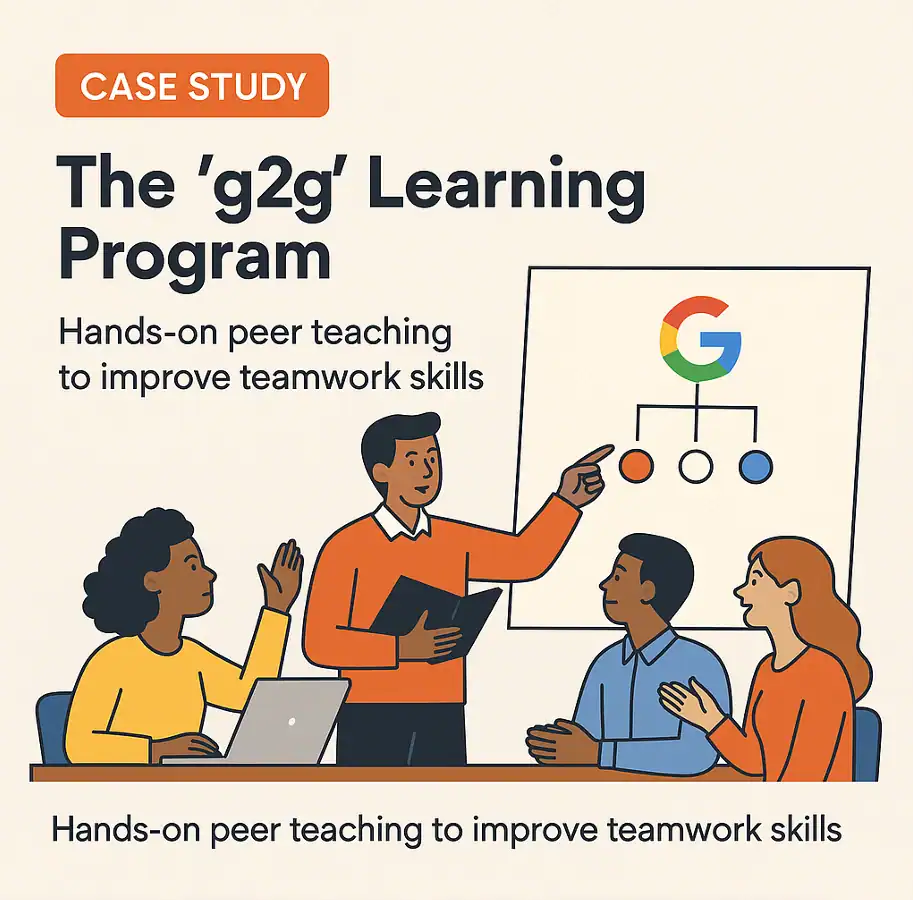
Case Study: Google’s g2g Learning Model
The “g2g”(Googler-to-Googler) learning program is an internal volunteer teaching network that focuses on hands-on learning to enhance teamwork skills within the company. Google realized that traditional corporate training was not effective amongst employees in helping them develop soft skills in communication, empathy, or team-building skills. So, they implemented the g2g program in which the employees teach each other new concepts and skills through active means of communication, simulations, and role-play. The outcome of this program was satisfactory, and employees reported more interpersonal skills and enhanced their team collaboration skills. This is greatly helpful for a team where every employee is working across time zones and cultures. Why this matters: Instead of staying stuck in echo chambers, this approach pushes people to hear each other and think differently.
Summary
We are all a bit too plugged into social media, which has become such a part of our lives that few of us stop to ask: Is this helping me grow or simply making me uncomfortable? Echo chambers don’t feel like traps; they feel safe and familiar. It’s nice to see content that matches our interests and what we already believe in. Because it makes us feel understood, maybe even validated. However, the comfort may hinder our growth because when we only hear what we agree with, we stop being challenged, stop questioning things, and begin seeing the world through a much narrower lens. This does not mean that social media is evil or that algorithms are secretly plotting against us. It simply means we have to use these platforms mindfully, as they will quietly determine for us what we believe, what we see, and even how we feel, without giving us the full picture. Growth begins with curiosity and has always been this way.
FAQs:
You might be in a social media echo chamber if most of what you see online agrees with your existing beliefs and values. You rarely encounter thoughtful opposing views, and when you do, they feel shocking or unreasonable. A simple test is to follow a few credible accounts with different viewpoints and notice how different your feed starts to look.
Social media echo chambers are not always completely harmful. They can provide comfort, validation, and a sense of belonging, especially around identity or interest-based communities. The problem arises when they hide important information, increase polarization, and make it hard to understand people who think differently from you.
Start small and intentional. Follow a few credible sources that offer different perspectives, especially on topics you care about. Pause before reacting to emotional posts, ask yourself what information might be missing, and balance online conversations with offline discussions where you can listen more deeply.
A filter bubble happens when algorithms personalize your feed based on your clicks, likes, and watch history. An echo chamber goes a step further: it is the social and psychological space where you mostly hear your own beliefs echoed back to you. Filter bubbles are more about technology; social media echo chambers are about how that technology shapes your thinking and relationships.
Social media echo chambers can limit your personal growth by reducing how often you encounter challenging ideas. When you mostly see content that confirms what you already believe, it becomes harder to question your assumptions, build critical thinking, or develop empathy for others. Over time, this can narrow your identity and make change feel threatening instead of insightful.


No comments yet. Be the first to share your thoughts!